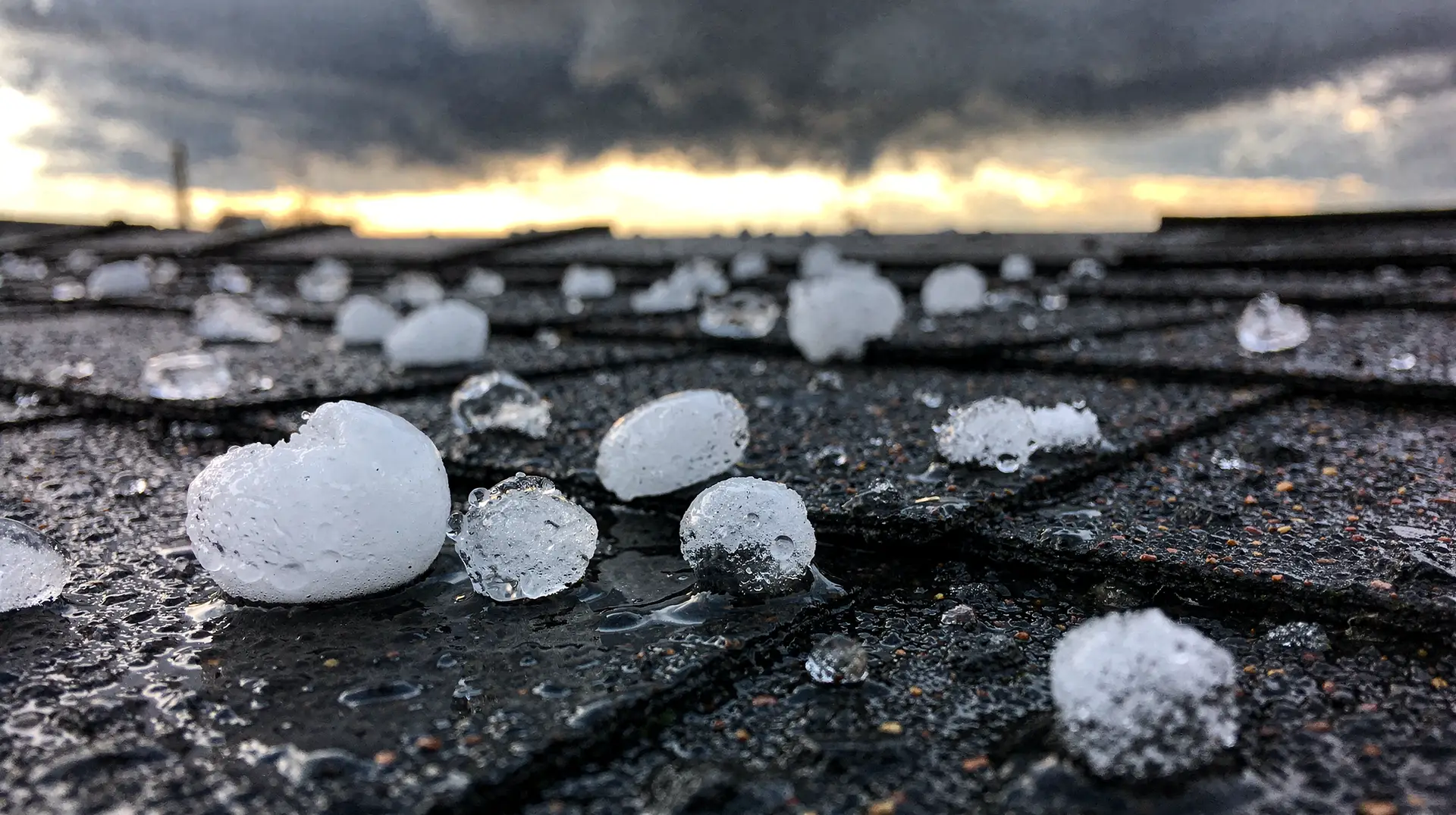
The Front Range sits in one of the most hail-prone regions in the country. When a storm rolls through Fort Collins, Loveland, Windsor, or Berthoud, we inspect free, document everything, and restore your roof — insurance claim included.
A roof can look fine from the driveway and still be totaled. Here's what a storm actually leaves behind — and why most policies give you a limited window to file after the storm date.
Hail crushes the granule surface and fractures the mat underneath. Invisible from the ground, but it shortens the roof's life dramatically.
Granules are the shingle's sunscreen. Once hail knocks them loose — check your gutters and downspouts — UV starts breaking down the asphalt fast.
Gutters, vents, and flashing dent before shingles do. It's the first thing adjusters look at, and the easiest evidence to spot from the ground.
The wind that drives hail also breaks shingle seal strips. The roof may shed water today and start leaking in next spring's storms.
Rubber boots and skylight seals take direct hits. Small, cheap parts — and a top source of the leaks that show up months later.
Most homeowner policies limit how long you have to file after a storm — often a year, sometimes less. A free inspection now protects the option, even if you never file.
We get on the roof and photograph every impact point, slope by slope — the evidence your claim will stand on.
If the damage doesn't justify a claim, we tell you that. If it does, you get a complete documentation file before you ever call your insurer.
We walk every slope together so nothing gets missed — here's how the claim process works.
Once the scope is approved, most roofs are replaced in a day or two — cleanup, paperwork, and all.
Yes. The damage that totals roofs — mat fractures and granule loss — is rarely visible from the driveway. The inspection is free, takes under an hour, and you'll get photos of whatever we find, including "your roof is fine."
Take the flyer, close the door, and call a local company you can find again next year. Jefe's is a non-soliciting company — we never knock — and we're based in Fort Collins, so we're still here when the warranty matters. More on how we work →
Policies differ, but most give you a limited window from the storm date — commonly around a year, sometimes less. Check your policy, and get the roof documented now even if you're undecided about filing.
That's common — storms have direction. Depending on the damage and your policy, insurers may approve one slope or the whole roof. We document every slope thoroughly so the claim reflects what's actually there. How claims work →
The inspection is free, the documentation is yours, and the filing window won't stay open forever.
